 KINSMC
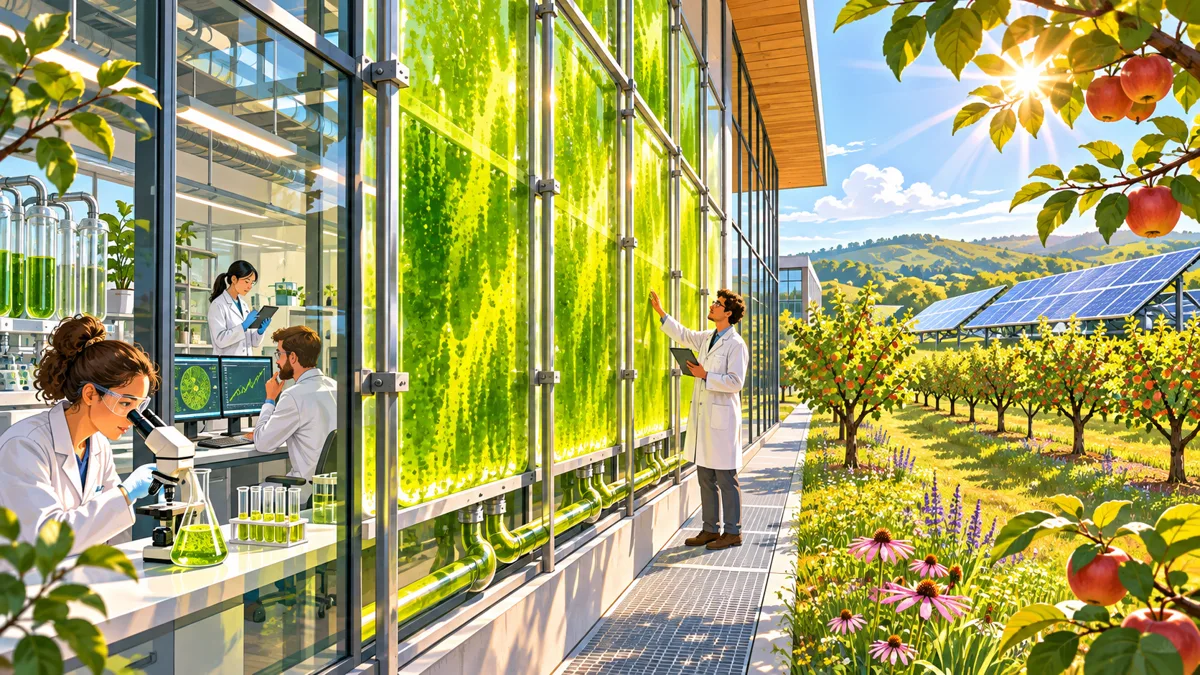
In brief. Agrivoltaic orchards combine fruit growing with solar electricity. German research compares crop protection, light, water, yields and energy economics under different designs.
Agrivoltaics combines agricultural production and solar electricity on the same area. In an apple orchard, panels can also change the amount of light and rain reaching the trees. That makes orchard design a combined crop-and-energy question. Generating electricity is measurable, but it does not by itself establish that the arrangement benefits fruit production or is profitable for a particular farm.
What the German research compares
Fraunhofer ISE's APV-Obstbau project describes comparing apple cultivation under different protection systems, including photovoltaic arrangements, hail protection and other coverings. The research asks how panel design affects crop conditions while producing electricity. Different varieties and seasons can respond differently.
A credible comparison uses a suitable reference area and records the conditions in each season. Fruit quality, harvest quantity, water use and disease management all deserve attention. A single successful harvest cannot establish a permanent yield improvement across different locations.
Shade is a design variable
Panel spacing, transparency, height and orientation affect how much light reaches the trees and when it reaches them. The structure also needs to work with farm machinery, workers and existing protection systems. An installation that produces useful power can still make orchard tasks more difficult if those needs are overlooked.
Ask whether any benefit comes from the panels themselves, their protective structure or a changed growing practice. Separating those effects helps determine what could be reproduced at another orchard.
Evaluate the complete economics
Published economic research examines both the farming system and the energy system. Include construction, maintenance, grid connection, financing, crop effects and the value of the electricity. State the assumptions about tariffs or support payments because those can change the conclusion.
Before investing, obtain a site-specific assessment and local planning advice. For a related building technology, read KINSMC's explanation of microalgae facades. Both are interesting examples of sharing one structure between functions, and both need measured performance rather than a universal savings claim.
Continue with How Microalgae Building Facades Produce Heat and Biomass for related context.