 KINSMC
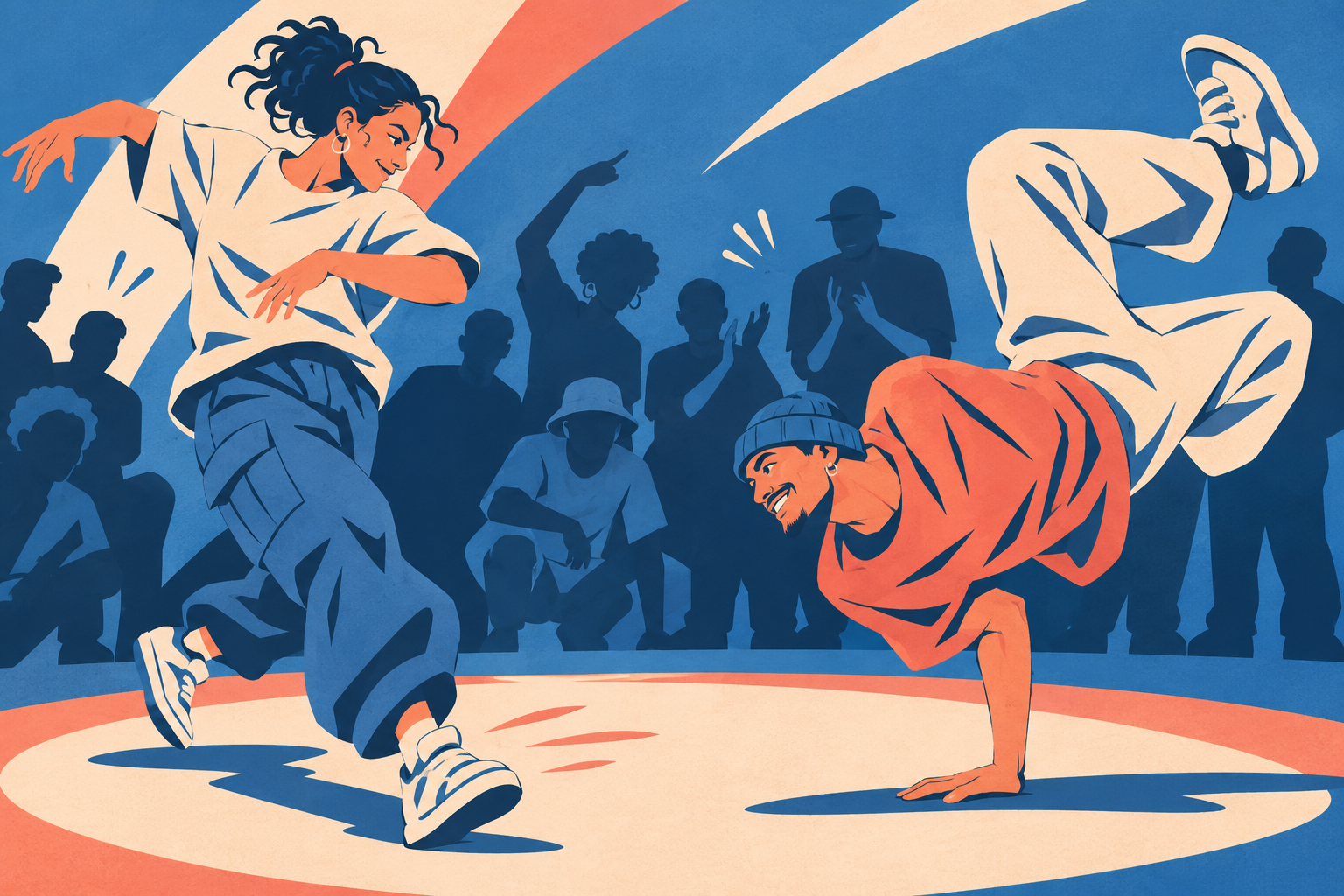
In brief: Breaking made its Summer Olympic debut at Paris 2024 on 9–10 August. Ami of Japan won the women’s event and Canada’s Phil Wizard won the men’s. The competition used head-to-head battles and a judging system that considered more than difficult tricks. This is a retrospective guide to the 2024 event, with a practical way to understand full replays.
What happened at Paris 2024?
The World DanceSport Federation’s event report records breaking’s Olympic debut at Place de la Concorde on 9 and 10 August 2024. The women’s medal competition took place first, followed by the men’s. These dates matter when reading older previews: an article describing the debut as upcoming belongs to the period before the Games, not to the current calendar.
Ami won women’s gold ahead of Nicka of Lithuania and 671 of China. In the men’s event, Phil Wizard took gold, Dany Dann of France silver, and Victor of the United States bronze. These are the recorded Paris results. They should not be confused with later world rankings or used as a prediction of who will win a different competition.
Start with the battle, not the highlight
If your first encounter with breaking is a short social-media clip, it can be difficult to understand why one athlete won. A clip may isolate an unusual move while removing the opponent’s response, the music or the rest of the round. A full battle gives you the context needed to follow the comparison being made. Start with a complete sequence before deciding whether an isolated moment tells the whole story.
The official Paris 2024 results book explains that athletes competed against each other in rounds, with one performing and the other responding. There was a group phase followed by knockout competition. Nine judges assessed each round. Their votes determined the round’s winner; the scoreboard was not a simple count of spectacular moves.
What did the judges consider?
The WDSF Paris 2024 hub identifies five judging criteria: technique, vocabulary, originality, execution and musicality. Taken together, those categories make clear why judging cannot be reduced to asking who attempted the hardest-looking trick. The athlete’s range, control, creative choices and relationship with the music all belong in the viewing picture.
For a newcomer, a useful viewing exercise is to follow one element at a time. On an initial replay, notice how each dancer connects movements. On another, listen closely to the music and watch how the performance responds. Then consider whether the sequence feels varied or repetitive. This is a way to become a more attentive spectator, not a replacement for the official judging rules or a claim that casual viewers can reconstruct every judge’s decision.
A clear example: the men’s final
Team Canada’s contemporary report, published on 10 August 2024, records Phil Wizard’s final against Dany Dann. Wizard won all three rounds. The first round was close, with a 5–4 split among the judges; the next two each went 9–0 in his favour. Those figures distinguish rounds won from individual judges’ votes.
That distinction helps when reading a result card. Saying that an athlete won three rounds describes the battle outcome. Reporting a 5–4 vote describes how the panel split within one round. Mixing those measures can make a close opening round look like an entirely different contest. Check the labels before comparing numbers from a screenshot or discussing the result with someone else.
How to watch a replay with more understanding
Begin with the athlete names, the competition phase and the date. A group battle and a medal final do not have identical stakes, and a reposted video may carry a misleading headline. Use the official event hub to locate full sessions where available. Playback availability can vary, so check the current service rather than assuming an old embedded player will work in every country.
Next, watch the performances without skipping the transitions. It is tempting to jump to a freeze or a power move, but the connections between moments are part of the performance you are trying to understand. Keep a simple note of what caught your attention, then compare your impression with the announced result. If they differ, revisit the full exchange instead of treating the disagreement as evidence of wrongdoing.
Finally, separate what you can observe from what you would need more evidence to know. You can describe a visible movement or quote an official score. You cannot reliably infer an athlete’s injury, emotional state or intentions from a few seconds of footage. Respectful analysis stays specific and leaves room for uncertainty.
Keep a historical result separate from future programmes
Paris 2024 established an Olympic milestone, but a debut does not by itself guarantee a place at every later Games. For programme questions, check the IOC information for the specific edition you mean. Avoid recycling a 2024 preview as an announcement about a future Olympics. The same habit is useful across sports: name the event and year, distinguish confirmed decisions from speculation, and link the record.
For more examples of reading numbers in context, see KINSMC’s practical guide to using evidence in decisions. The principle applies here too: identify what a number measures before using it to support a conclusion. A judges’ vote, a round score and a final placing answer different questions.
Sources and editorial review
Reviewed 28 November 2026. Historical dates and medal results were checked against WDSF’s Paris report and official results book. Judging categories and replay context were checked against its Paris 2024 hub; the men’s final example was checked against Team Canada’s report dated 10 August 2024. Viewing suggestions are KINSMC editorial guidance. This original retrospective restores a missing URL and does not claim to reproduce the deleted article. The featured image is an original AI-generated illustration, not event photography.