 KINSMC
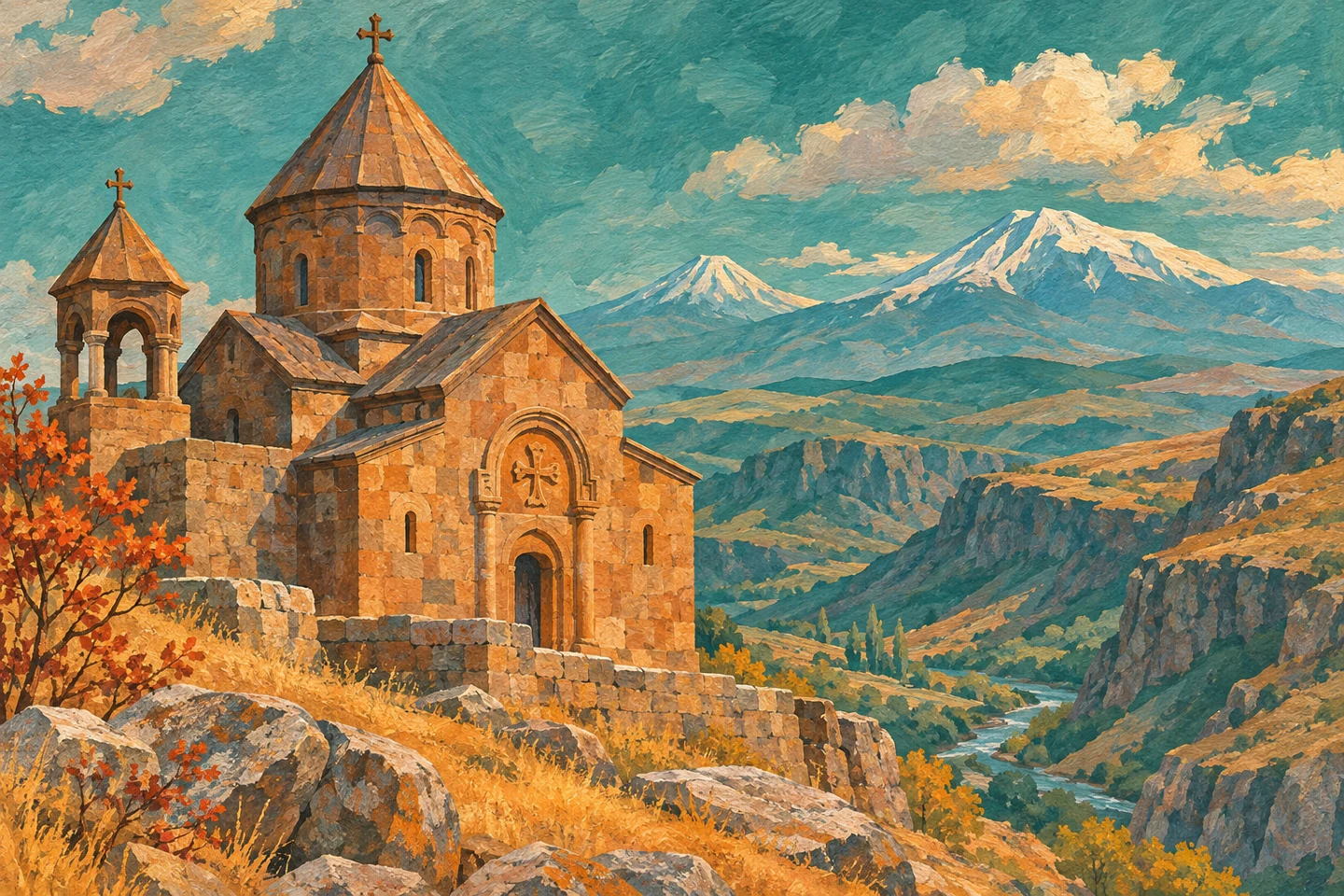
In brief. Armenia’s UNESCO World Heritage record lists three cultural properties: Haghpat and Sanahin, Geghard and the Upper Azat Valley, and Echmiatsin with Zvartnots. They offer different starting points for understanding religious architecture, learning and landscape. This guide explains those differences and how to read the official records. It does not turn the list into a guaranteed itinerary or a complete account of Armenian history.

A heritage list is most useful when it leads to better questions. What is being recognised: one building, a complex or several related places? Which part of the description concerns architecture, and which concerns historical use? Begin there rather than trying to fit every name into a tightly packed day of travel.
Start with the property names and their status
The UNESCO Armenia country record identifies three inscribed cultural properties. It separately lists tentative nominations, which are not the same as completed inscriptions. A place appearing on the tentative list should not be promoted as an already inscribed World Heritage property.
Notice that several names can belong to one property. Counting individual buildings is different from counting inscriptions. For a school project or personal reading list, copy the full official title before shortening it in your notes. That simple step helps prevent a familiar name from obscuring the other places included in the same recognised property.
Haghpat and Sanahin: architecture and centres of learning
The Haghpat and Sanahin record describes monastic complexes associated with the tenth-to-thirteenth-century period and their importance as centres of learning. It highlights Sanahin’s school of illuminators and calligraphers and discusses a distinctive Armenian architectural development drawing on Byzantine and regional traditions.
That gives a reader more than a pair of exterior views. It invites questions about the relationship between buildings and the activities conducted within a complex. When looking at an identified plan or photograph, ask which parts are labelled and what evidence the source gives about their use. Do not assign a function to an unlabeled room simply because it looks plausible.
If a later article describes a particular manuscript or scholar, check that separate claim against its own evidence. A general statement that a monastery was a learning centre does not establish every story attributed to it. Keeping the scale of the evidence clear makes the history more interesting, not less.
Geghard: read the relationship between rock and building
The Geghard and Upper Azat Valley record describes churches and tombs, many cut into rock, within a complex set among cliffs at the entrance to the valley. Here, the physical relationship between architecture and landscape is central to the official description.
For an introductory comparison, distinguish a photograph of a façade from one showing the surrounding rock and valley. What does each view help explain, and what remains outside the frame? Neither photograph alone proves the chronology of all the spaces shown. Use the property text and identified documentation for that question.
Avoid treating a dramatic landscape as a reason to invent geological or engineering explanations. If you want to explain how a particular chamber was made, seek a source that addresses that structure and method. The heritage description establishes significance; it is not automatically a technical study of every construction detail.
Echmiatsin and Zvartnots: buildings and archaeological evidence
The Echmiatsin and Zvartnots property brings together a cathedral, churches and an archaeological site. UNESCO explains their significance in the development of Armenian central-domed church architecture and its regional influence. The official title matters because standing structures and archaeological remains offer different kinds of evidence.
When looking at a reconstruction drawing, identify it as a reconstruction. Do not present it as a photograph of a complete surviving building. Likewise, a modern illustration can help introduce a subject without establishing an original appearance. Ask what is physically documented and what the interpretation adds.
Religious buildings can also be discussed as places with meanings beyond their visual design. Use the appropriate sources when making claims about present worship or access. A historical description does not determine whether a service is taking place, whether an interior is open or what arrangements apply on a particular day.
Build a comparison that preserves the differences
A useful reading sheet can use three questions: what is the property’s scope, what does UNESCO identify as significant, and what further evidence would answer your next question? Haghpat and Sanahin invite attention to monastic institutions; Geghard to architecture and rock; Echmiatsin and Zvartnots to church development and archaeological interpretation.
These are starting points, not exclusive definitions. Record the source and date beside each factual note. Put your own response to an image in a separate line so that an impression is not accidentally repeated later as a documented fact.
KINSMC’s Asmara heritage introduction offers a different example focused on an urban landscape. Use the comparison to explore how the unit of heritage changes, while keeping the countries’ histories and cultural contexts distinct.
Separate heritage interest from current access
The FCDO advice checked 28 November 2026 advises against all travel to specified areas, including within 5 km of the eastern Armenia–Azerbaijan border and along the M 16/H 26 road between Ijevan and Noyemberyan. The advice also states that the Azerbaijan border remains closed. Consult the full current official guidance before planning travel.
This profile does not establish a safe route between the properties, a border-crossing entitlement, opening times or a tour’s availability. Anyone considering a visit should check the relevant authority or operator for the actual date and arrangements, separately from reading historical background.
KINSMC’s guide to verifying AI travel plans can help keep those tasks separate. A useful country introduction should leave you with a clearer understanding of the sites and a better source list, rather than confidence in practical details that have not been checked.
Sources
UNESCO: Armenia country record · UNESCO: Haghpat and Sanahin · UNESCO: Geghard and Upper Azat Valley · UNESCO: Echmiatsin and Zvartnots · FCDO: Armenia advice
Editorial source and review notes
Reviewed 28 November 2026. Original English heritage/reference guide matching Armenia country route; original deleted article unavailable in connected trash. UNESCO country and three property records checked directly. Current FCDO warning checked; no tourist itinerary, safe route or admission/opening promise. Source-reading questions are original editorial suggestions. Inscribed/tentative status and physical evidence/reconstruction distinguished. Original conceptual AI illustration, not exact monument photography.