 KINSMC
PROMISE is NASA’s planned nuclear-powered rover for the Moon’s south polar region. Announced in a November 7, 2026 mission update, it is intended to investigate the ground and possible resources while testing technology for future exploration. NASA is targeting a late-2028 launch and an 18-month primary mission; neither milestone has happened yet.
What does PROMISE stand for?
The name expands to Polar Rover for Observation, Mapping, and In-Situ Exploration. NASA’s mission overview describes a robotic scout that would examine the lunar surface and subsurface. In-situ means taking measurements at the location being studied, rather than relying only on observations from an orbiting spacecraft.
JPL plans to build the vehicle using existing Curiosity and Perseverance hardware, including test-bed and spare components. The mission is not taking either working Mars rover away from Mars. Reusing hardware on Earth is a different proposition from retrieving a spacecraft on another planet.
Why nuclear power matters in lunar shadows
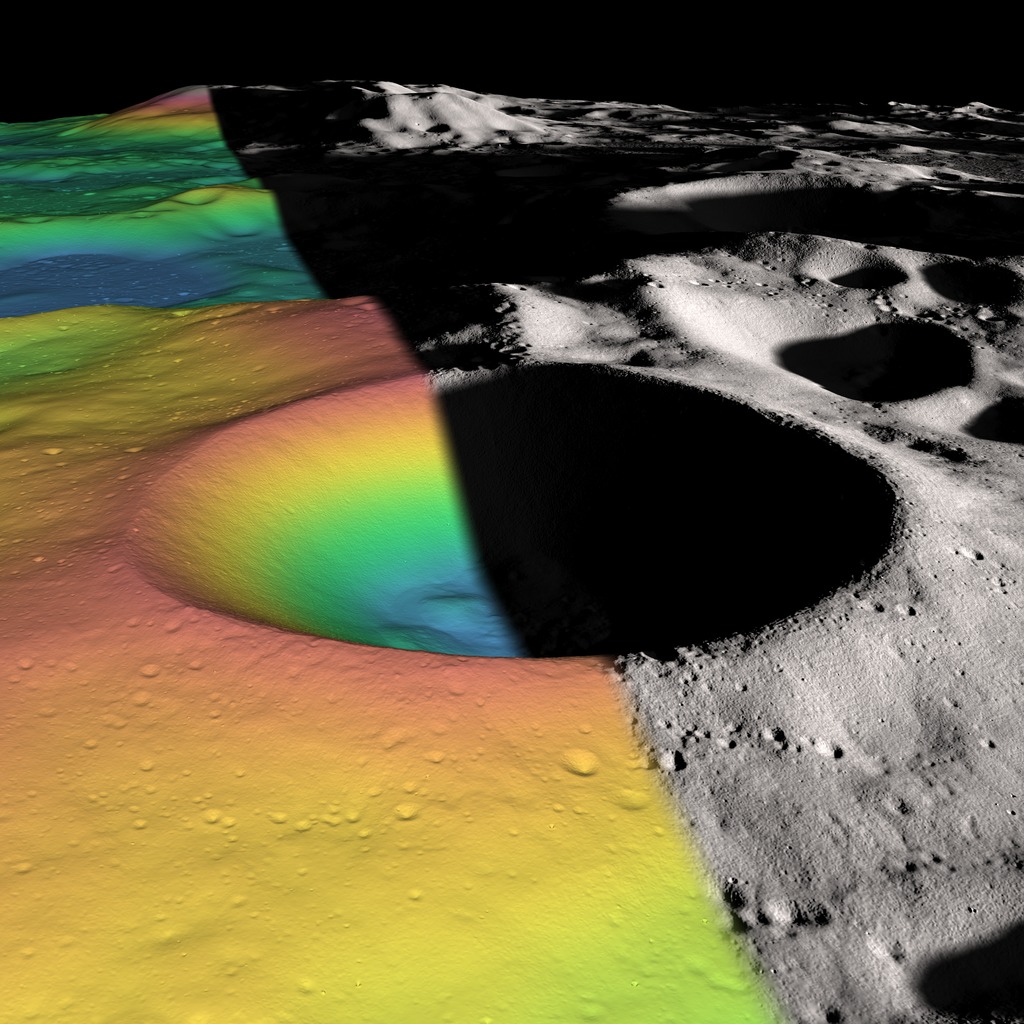
The south pole is not uniformly dark. As NASA’s regional environment guide explains, the Sun stays close to the horizon there. Local slopes, crater walls and elevation produce a patchwork of illumination. Some areas receive extended sunlight, while other surfaces remain permanently shadowed.
That creates an important design problem: the places researchers want to study may offer little or no sunlight for solar panels. A nearby illuminated ridge does not guarantee light at the bottom of a crater. Surface operations must account for the conditions at the vehicle’s actual location.
PROMISE’s planned power source is a multi-mission radioisotope thermoelectric generator, or MMRTG. NASA’s radioisotope power explanation describes how these systems use heat from the natural decay of plutonium-238 to generate electricity. Their usefulness comes from producing power without requiring continuous sunlight.
The practical distinction is between collecting incoming solar energy and carrying a long-lasting heat source. Some waste heat can also help keep spacecraft equipment warm. That does not make a rover immune to cold or remove the need for careful thermal design. Power, navigation, communications and equipment survival remain separate engineering problems.
What is the rover intended to measure?
In its November 7 announcement, NASA describes a drill intended to investigate material about one metre below the surface, instruments for analysing composition, temperature and radiation measurements, and cameras. The rover is also planned to demonstrate advanced computing and autonomy technology.
These measurements answer different questions. A camera can show terrain and obstacles. Composition measurements help identify material. Subsurface sampling can test whether a surface observation represents what lies below. Combining observations is more informative than treating one attractive image as a complete resource assessment.
Does this mean usable lunar ice is guaranteed?
No. NASA reports evidence of frozen materials in some permanently shadowed regions, but also emphasizes that their distribution and concentrations vary. A dark crater is not automatically a uniform deposit, and the presence of water-related material is not the same as a demonstrated supply that people can extract economically.
For readers evaluating future discoveries, four questions are useful: where was the measurement taken, what exactly was detected, how much material was inferred, and how representative is that location? A result from one sampling point should not silently become a claim about an entire polar region.
PROMISE has not yet returned measurements from the Moon. Its instruments and scientific objectives are plans. Future observations would need to be reported with their methods, uncertainties and geographic limits before broader conclusions could be drawn.
What should readers watch next?
The most meaningful milestones will be completed hardware tests, launch preparations, delivery to the surface and the release of actual measurements. A contract announcement establishes that a program is moving forward; it does not demonstrate a successful landing or a scientific discovery.
NASA’s schedule should therefore be read as a target, not a countdown guarantee. The interesting lasting question is how a rover can work where sunlight is unreliable and how local measurements can improve future exploration decisions.
For the human side of NASA’s current recruitment news, see our 2026 astronaut application requirements and deadline guide. For a different spacecraft environment, our orbital decay explainer covers why satellites around Earth eventually lose altitude.
Checked November 8, 2026. Mission dates and payload descriptions are NASA plans as of that date. Primary sources are linked in the relevant sections.