 KINSMC
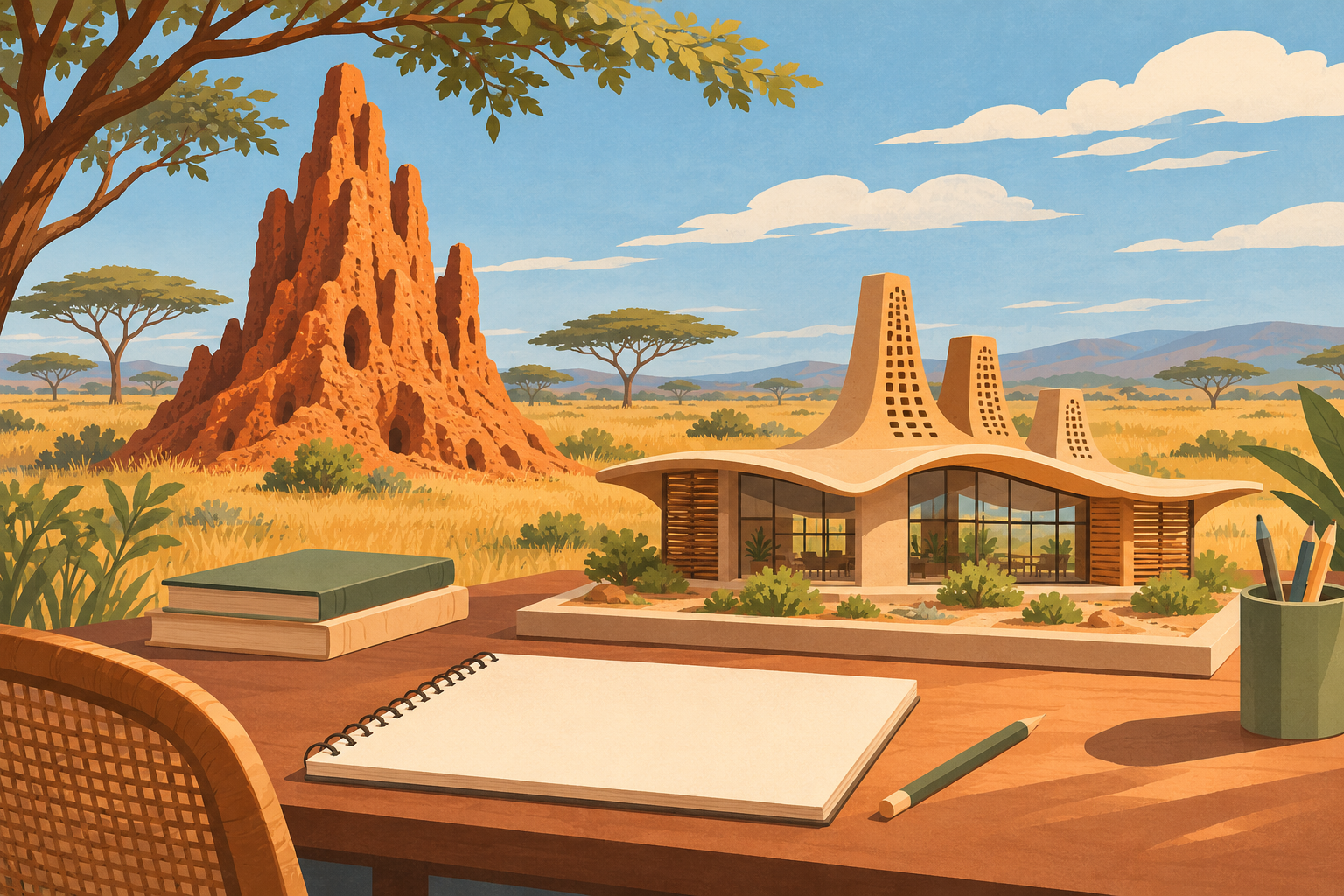
In brief: Measurements inside termite mounds have shown how daily temperature changes can drive ventilation. That finding can inspire building research, but it does not prove that copying a mound will cool any house. Ventilation, cooling and energy savings are different outcomes. A credible design claim needs evidence from the proposed building and its climate, not just an appealing comparison with nature.
What did researchers actually measure?
A 2015 paper in PNAS investigated mounds built by the termite species Odontotermes obesus. The researchers measured internal airflow alongside daily changes in temperature. Their evidence concerned a particular biological structure and a particular ventilation mechanism; it was not a trial of a commercial household cooling system.
The study describes a combination of tunnel geometry, different thermal responses and porous material. Thin outer conduits warm more quickly than deeper parts during the day. The resulting temperature differences drive circulating air, and the direction reverses at night. The cycle helps remove carbon dioxide from the nest. The key observation is moving air through an organized structure in response to changing environmental conditions.
Why the finding attracts architects
The Wyss Institute’s account, published on 31 August 2015, explains the measurements and their possible relevance to sustainable architecture. It presents the mound as inspiration for designs that use day–night temperature variation. That is a research opportunity, not a universal construction recipe or a guaranteed percentage reduction in energy consumption.
A useful way to read this kind of story is to separate three stages. First comes an observation in nature. Next comes an engineering proposal inspired by it. Finally comes testing of a working design. Evidence at one stage can motivate the next, but it cannot substitute for it. An attractive drawing belongs to the proposal stage until measurements demonstrate how it performs.
Ventilation is not the same thing as cooling
The distinction matters because the termite study’s measured mechanism concerns airflow and gas exchange. A headline about a naturally ventilated mound should not silently become a promise that an occupied home will stay at a chosen temperature. Nor does a picture of a mound-shaped building establish that it works through the same mechanism.
When comparing claims, ask the author to name the outcome precisely. Do they mean air movement, removal of carbon dioxide, indoor temperature, comfort or electricity consumption? Ask what was measured and where. A result described only as “better performance” is difficult to assess because there is no clear question behind the comparison.
Five questions to ask about a termite-inspired building
First, what part of the biological mechanism has been translated into the design? Look for an explanation of the airflow path and the environmental conditions it uses. A resemblance in external shape is not enough. If a project describes itself as nature-inspired, ask for the connection between that inspiration and a testable design choice.
Second, what is the comparison? A claim of lower energy use needs a stated baseline. Ask whether the comparison concerns the same building under another operating approach, a simulation, or a different building altogether. These comparisons answer different questions and should not be presented as interchangeable.
Third, how long was the design tested? Ask whether the available evidence covers a brief demonstration or a meaningful period of normal use. Fourth, which conditions were recorded? A report is easier to interpret when the weather, occupancy and operating arrangements are described. Fifth, who collected the data, and can you read the methods rather than only a promotional summary?
Read simulations and demonstrations carefully
A simulation can help explore a proposal, but readers should be able to identify its assumptions. A small model can illustrate an idea, but its result should be labelled as a model result. A completed building can supply stronger practical evidence, provided its measurements and comparison are clear. None of these labels makes evidence worthless; they tell you which conclusion it can support.
Try writing a claim in this form: “Under these stated conditions, this test found this measured outcome.” If the source cannot fill in those parts, keep the conclusion modest. Avoid adding precise savings figures merely because they appear in a reposted infographic. Trace the number back to a technical report and check whether it refers to the same project.
What this means for a homeowner
Use the research to ask better questions of a qualified building professional. Describe the problem you want to solve and ask what evidence supports the options for your home. Do not treat an article about termites as instructions to alter structural elements, add openings or remove an existing ventilation system. The biological study alone cannot establish the suitability of a particular alteration.
For a more practical starting point, see KINSMC’s guide to shade and ventilation at home. For a different example of biological ideas entering architecture, our microalgae building facades explainer examines another technology whose proposed benefits need to be understood separately from its real-world performance.
Sources and editorial review
Reviewed 28 November 2026. The scientific mechanism was checked against the 2015 PNAS paper and Harvard Wyss Institute’s report linked above. The questions for assessing building claims are KINSMC editorial guidance. No household trial, construction specification or energy-saving percentage is claimed. This newly written explainer restores the subject of a deleted 2022 link without presenting the older research as a new discovery. The featured image is original AI-generated conceptual artwork, not a scientific diagram.