 KINSMC
Start with the grass a herd can actually use
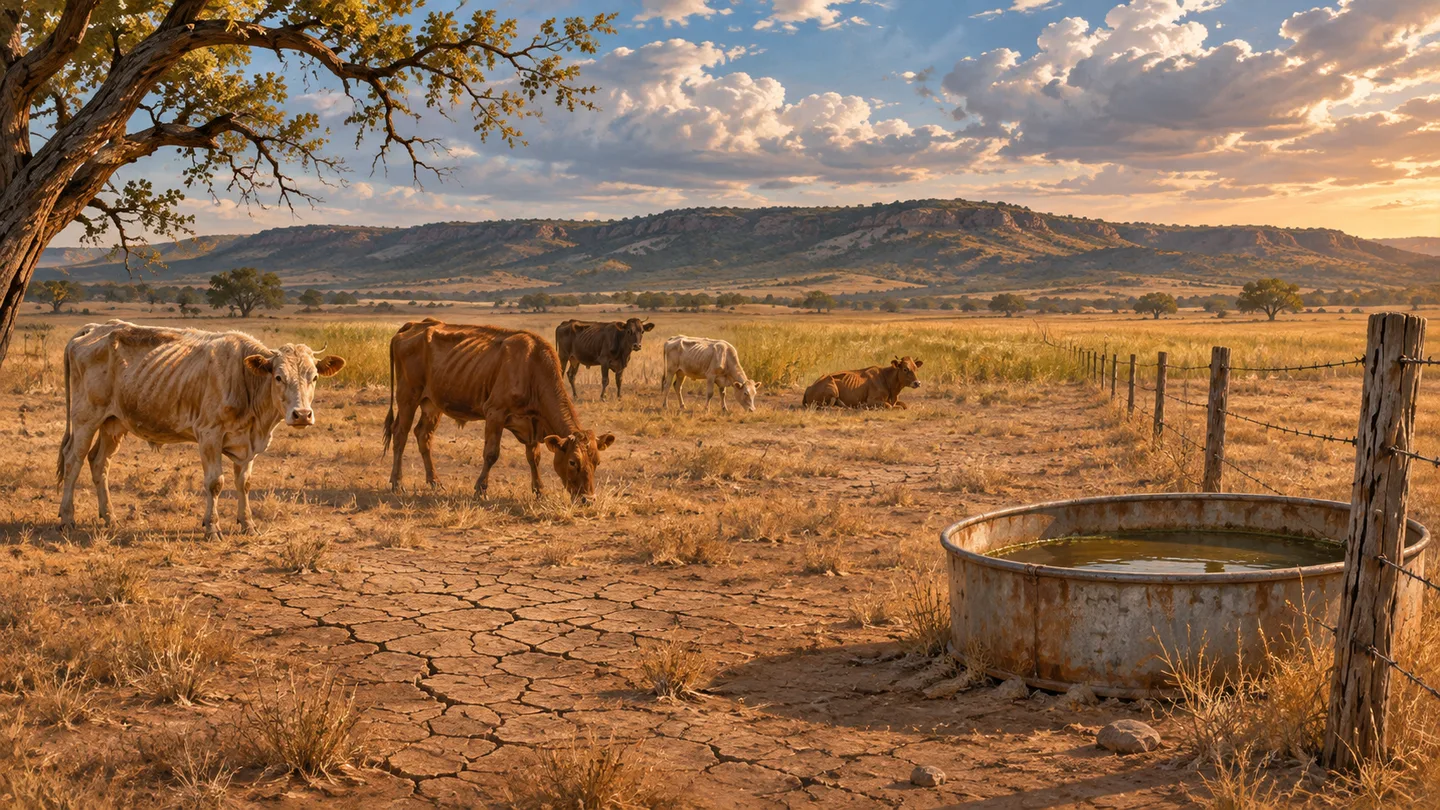
When rainfall falls short, a ranch can still look green from the road while producing less usable feed than its herd needs. Grass growth varies by soil, plant species, time of year and how the pasture was used before the drought. Cattle also need reliable drinking water. A rancher deciding how many animals to keep has to work with the usable forage and water on the operation, plus any feed or grazing that can realistically be brought in.
Think of it as a budget. Pasture contributes a limited supply of feed, and the cattle consume some of that supply every day. When growth slows, the gap between supply and use can widen week by week. If the ranch keeps grazing at the previous rate, cattle may have to search farther for feed and fewer plants may get the time they need to recover. Looking at the whole season can reveal a problem before a single pasture looks bare.
Why buying hay only solves part of the problem
Hay can help bridge a shortage when the ranch can source, transport and store it. The delivered price matters, as does the feed’s suitability for the animals that will eat it. Buying a few weeks of hay is a different decision from planning to replace most of a grazing season. The operation still needs water, room to feed the animals and a realistic plan for labor. Supply can also become difficult when several areas are facing similar weather.
One option described by University of Nebraska–Lincoln Extension is keeping cattle in a drylot for a period to take pressure off the pasture. That changes the job. Someone has to provide feed and water and manage the pen and manure. The economics depend on facilities, feed prices and the cattle involved. An operation might also move some animals to another pasture, if suitable land and water are available. Each option changes a different part of the forage budget.
Why selling part of the herd can help
Destocking means reducing the number of animals that depend on the available feed and water. A rancher might sell some cattle, sell calves earlier than usual or make a larger change if the shortage is severe. The goal is to line up demand with resources. A smaller herd may leave enough forage for the animals the ranch keeps and give stressed pasture more time to recover.
Selling earlier also gives the rancher time to make a deliberate choice about which cattle to retain. Nebraska Extension describes protecting a core group of productive breeding females when rebuilding is a goal. Age, records, health, the stage of the production cycle and the needs of the operation can all affect the decision. Records help because two animals that look similar may have very different histories. A veterinarian or local extension adviser can help with decisions that depend on animal condition or the forage situation in a particular area.
How a rancher decides when to act
Imagine an operation with enough usable forage for only part of the usual grazing period. Its managers can compare a few options on paper. What would it cost to feed the entire herd off pasture for the missing weeks? How much demand would be removed by selling a group? What facilities and water would still be needed? Under each option, what would trigger another change if rain does not arrive? Writing those questions down makes it easier to distinguish a plan from a hope that conditions will improve.
A trigger can be tied to the operation’s own measurements: available forage, the level or reliability of a water source, or the date by which another pasture must be secured. A useful trigger leaves time to arrange transport, locate feed or discuss the next step with advisers. It should reflect local conditions. A single number taken from another ranch may miss major differences in vegetation, herd needs or access to feed.
Water deserves a separate check. An operation might have hay in storage while a well, pond or pipeline supplies less water than usual. The useful question is how much water can reliably reach each group of cattle every day, and how long that arrangement can last. Feed and water limits can point to different actions.
Why rebuilding can take longer than the drought
A rain event can refill a tank or start new growth, but the ranch still needs to assess how well pasture has recovered. The breeding herd may also take time to rebuild. Retaining a core group preserves part of the operation’s capacity to expand when conditions allow. A ranch that sold more animals may need to buy replacements or raise more heifers over time. Those decisions depend on feed, finances and the quality of the animals available. This is why a decision to reduce the herd can affect a ranch long after the immediate shortage passes.
Sources
University of Nebraska–Lincoln Extension on strategic cowherd destocking · University of Nebraska–Lincoln Beef Extension on drylotting