 KINSMC
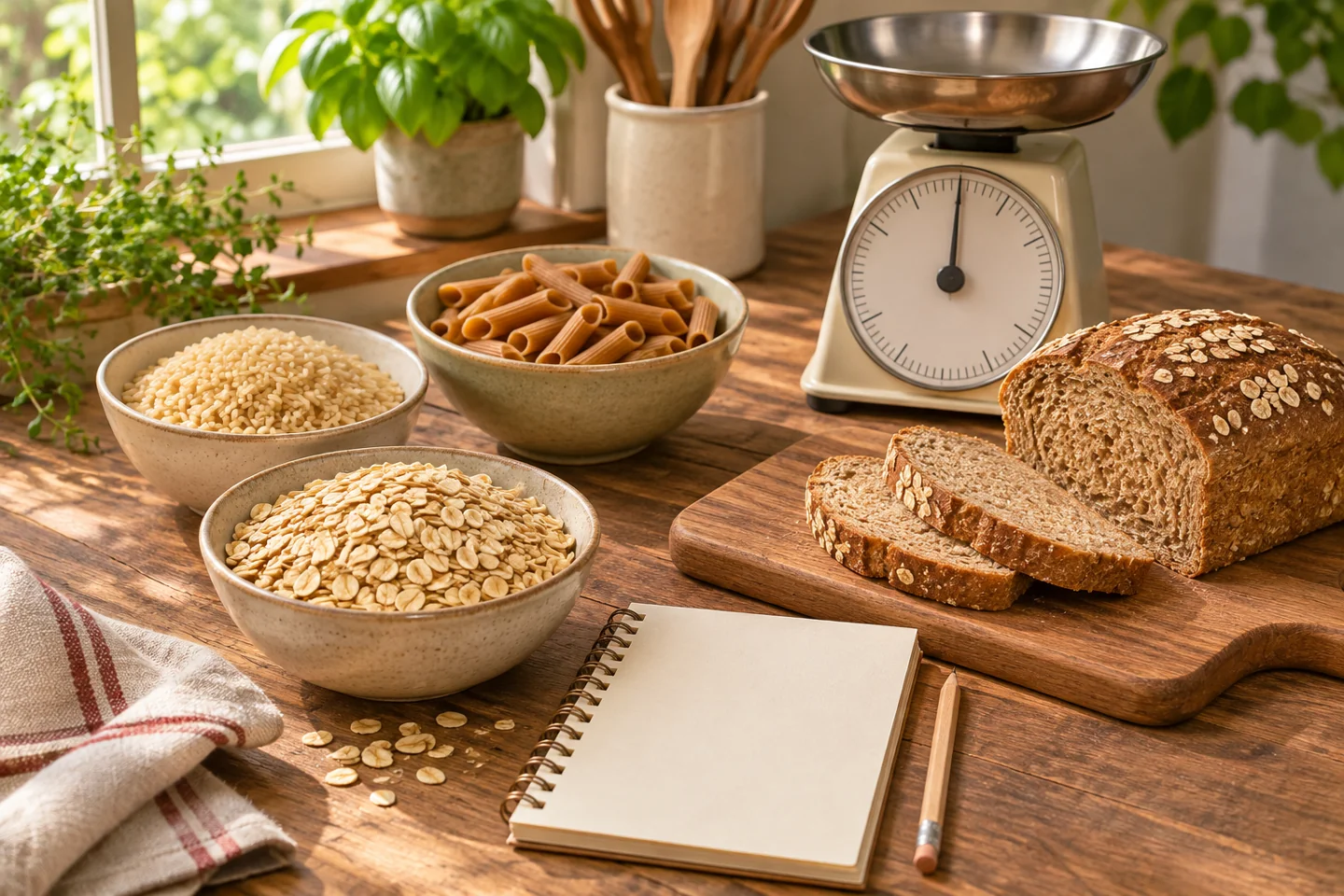
In brief. If a recipe gives flour in grams, weigh that amount rather than converting it back to cups. King Arthur Baking uses 120 g for a cup of all-purpose flour in its recipes, but that is a stated recipe convention, not a universal weight for every flour or every author’s cup. Match the ingredient and measurement method before scaling a recipe.
A cup looks precise because its rim is a clear stopping point. With flour, however, the way you fill that space matters. This guide explains how to keep your measurements consistent, how to interpret a cups-to-grams conversion and how to record changes so the next batch is easier to understand.

Start with the recipe’s own units
Before reaching for a cup or a scale, read the ingredient line and any measurement notes. Does the author supply a gram weight? Which flour is named? Does the method describe how to fill a cup? Keep those instructions together. Converting the amount using one website and following a different author’s recipe can quietly change the intended quantity.
King Arthur’s recipe success guide sets out the measurement assumptions behind its own recipes. That makes it a useful primary source for baking from that publisher. It should not be treated as proof that every recipe elsewhere uses the same convention. If another author supplies weights, use those weights for that recipe.
Why grams and cups answer different questions
A cup measures volume; grams measure mass. Flour can occupy a measuring cup with different amounts of air between its particles. Packing or compressing it changes how much fits. Weighing removes that particular ambiguity, although it does not make different types of flour interchangeable or correct every possible recipe problem.
The King Arthur ingredient chart lists 120 g per cup for all-purpose flour and different figures for some other flours. Choose the exact ingredient entry. A familiar-looking word such as “flour” is not enough to select a conversion for an almond product, a wheat flour and a particular gluten-free blend.
How to weigh flour without including the bowl
King Arthur’s flour measurement guide describes using the tare control to remove the vessel’s weight from the reading. Put your empty bowl on the scale, select grams and tare it to zero. Add flour until the display reaches the recipe’s stated amount.
Pause before adding the next ingredient and check the unit and number again. If you overshoot, removing a little flour is straightforward while it is still separate. Once several dry ingredients are combined, taking out a spoonful removes a mixture rather than flour alone. This is a reason to check at each stage instead of only looking at the final bowl.
If you prefer weighing ingredients into one bowl, keep a written tick beside each completed measurement. Taring does not record what you have already added. A short interruption can leave you wondering whether you weighed the flour or merely placed it beside the scale. Use your appliance instructions for capacity limits and operation.
A small conversion table with a clear assumption
The following figures are arithmetic using King Arthur’s 120 g-per-cup all-purpose flour convention. They are not independent kitchen measurements and should not replace a recipe’s own specified weight.
| All-purpose flour volume | Weight using 120 g per cup |
|---|---|
| ½ cup | 60 g |
| 1 cup | 120 g |
| 1½ cups | 180 g |
| 2 cups | 240 g |
| 2½ cups | 300 g |
| 3 cups | 360 g |
Keep the assumption beside any conversion you save. A note saying “three cups equals 360 g using this source” is more useful than an unexplained number. If you later change the flour or discover the recipe author’s own weight, you can see exactly what needs updating.
Measuring with a cup when you do not have a scale
For its recipes, King Arthur recommends loosening flour in its container, spooning it into a dry measuring cup and levelling the top with a straight edge. Follow the recipe author’s instructions when they specify another method. Do not combine a chart based on one filling method with a deliberately packed cup.
Use a proper measuring cup rather than a drinking mug. Keep your method consistent between batches and note it in your recipe. Buying equipment is not the only useful improvement: knowing how you measured an earlier successful batch can be more helpful than changing tools and ingredients at the same time.
Convert first, then scale the recipe
An original arithmetic example: a recipe specifies 360 g flour for 12 equal portions. To plan eight portions, the scale factor is 8 ÷ 12, or two-thirds. Multiplying 360 g by that factor gives 240 g. This calculation changes quantity; it does not establish a new baking time or guarantee that a smaller pan behaves identically.
You can use the KINSMC cooking calculators for ingredient scaling and temperature conversion. Select the flour weight from your recipe or an appropriate ingredient reference first. The tool is not a universal cups-to-grams converter and cannot decide which flour a recipe requires.
Write the original amount and revised amount in separate columns. Cross out neither until you have checked the full ingredient list. That way, if you decide to make the original batch size after all, you do not have to reconstruct the recipe from half-converted notes.
Use measurement records to diagnose a disappointing bake
Imagine a hypothetical recipe intended to use three cups at 120 g each. If someone instead adds 450 g, the difference is 90 g, or 25% more flour than the 360 g target. This invented example illustrates why the measurement assumption matters; it is not a claim about what every scooped cup weighs.
If a bake disappoints, record flour type, measured amount, filling method and any substitutions before changing the recipe. For a separate ingredient question, our baking soda versus baking powder guide explains why raising agents are not automatically interchangeable. An accurate flour measurement cannot compensate for an unrelated substitution.
Keep one stable version as your reference and make deliberate changes from it. The useful outcome is not a perfect-looking conversion sheet: it is a recipe record that explains what you actually put in the bowl and lets you repeat a result you liked.
Editorial sources and review
Reviewed 29 November 2026. Primary sources: King Arthur Baking’s ingredient weight chart, flour measurement article and recipe success guide, linked above. The 120 g figure is explicitly attributed to that publisher’s all-purpose flour convention. Table values and worked examples are arithmetic, not measured product tests. Original practical editorial content; no book passages, distinctive examples or screenshots reproduced. Existing original KINSMC illustration reused with descriptive ALT. Published, draft and trash inventory checked before drafting; existing flour-thickening and raising-agent guides have distinct primary purposes. No independent recipe test or equipment calibration claimed.