 KINSMC
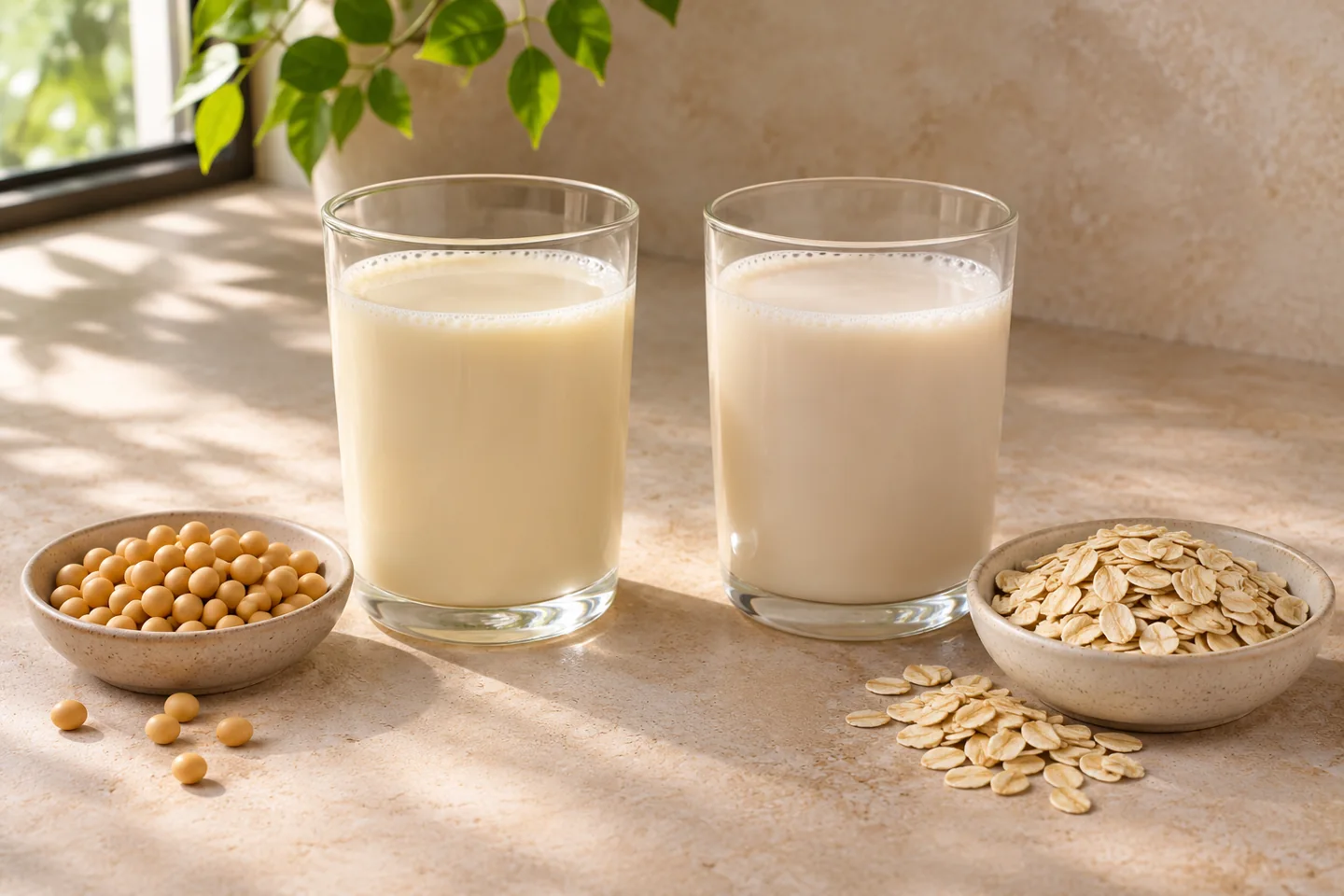
Soy milk and oat milk can fill the same space in a shopping basket, but their nutrition labels can tell different stories. Soy beverages commonly provide more protein, while the amounts of sugar, calcium and vitamins depend on the product. A useful comparison starts with the cartons you can actually buy and the amount you plan to drink.
Start with the same serving size
Put the two cartons side by side and find the serving size before comparing any numbers. A value for 100 mL and a value for a 240 mL cup describe different quantities. Multiply a per-100-mL figure by 2.4 to compare it with a 240-mL serving. Keep the units beside your notes so that a larger serving does not look like a more concentrated product.
For example, imagine a beverage with 3 g of protein per 100 mL. That would provide 7.2 g in 240 mL. This is a calculation example, rather than a measured value for a named brand.
What to compare on the carton
| Check | What the comparison tells you |
|---|---|
| Protein | Compare grams for an equal volume. Soy is a useful starting point when protein is a priority. |
| Added sugars | Compare the separate added-sugars line on a US Nutrition Facts label. |
| Calcium and vitamin D | Look for the amounts listed. Fortification differs between products. |
| Ingredients | Check the plant base, sweeteners and any added nutrients. |
| Price and use | Compare cost per litre and choose an amount you will finish. |
The FDA explains that a plant beverage’s nutrient content depends on its ingredients and processing. Its consumer guidance recommends comparing protein, calcium, vitamin D and potassium alongside saturated fat and added sugar. A familiar word on the front of the carton cannot replace that check. FDA guidance on milk alternatives.
Protein and fortification answer different questions
In chapter 10 of Food Sense, Christopher Gardner discusses choosing among plant beverages according to their ingredients and intended use. Soy and other legume-based options can be useful when comparing protein. Calcium fortification is a separate consideration. An oat beverage may contain added calcium even when its protein content differs substantially from a soy beverage.
Write down both figures if you use the drink regularly. This avoids choosing on a single prominent claim such as “source of calcium.” Check vitamin D and other listed nutrients individually as well. The FDA provides a label-comparison guide for this purpose.
Choose for the job you want it to do
For a drink used in breakfast every day, the nutrient comparison may carry considerable weight. For a small splash in coffee, taste, texture and how much you use may shape the choice. A product sold for coffee can have a different ingredient list from the same brand’s standard carton. Compare those products separately.
A practical way to decide is to shortlist two suitable cartons, buy the smallest useful sizes and record your own observations. Note how each tastes in your usual breakfast or coffee, what it costs per litre and whether you finish it before the package’s stated use-by period after opening. This article does not rank brands or report a taste test.
Common shopping questions
Is every soy milk higher in protein than every oat milk?
Recipes and added ingredients vary. Use the actual protein value on the carton, especially for blends or products with added protein.
Does added calcium make two drinks nutritionally equivalent?
Calcium is one part of the comparison. Protein, vitamins, sugar and other ingredients can still differ.
Can the same comparison be used for children?
This is a general grocery-label guide. Infants and young children have age-specific feeding needs. Ask an appropriate health professional before replacing a child’s usual milk.
Related label and protein guides
For a worked sugar-label example, read added sugar vs total sugar. For the bigger picture behind protein variety, see whether plant proteins need combining at every meal.
Sources and editorial note
Background reading includes Christopher Gardner’s Food Sense: What to Eat and Why, chapter 10, alongside the FDA resources linked above. This AI-assisted educational article was prepared by KINSMC. Product formulas can change, so use the label on the carton you purchase.