 KINSMC
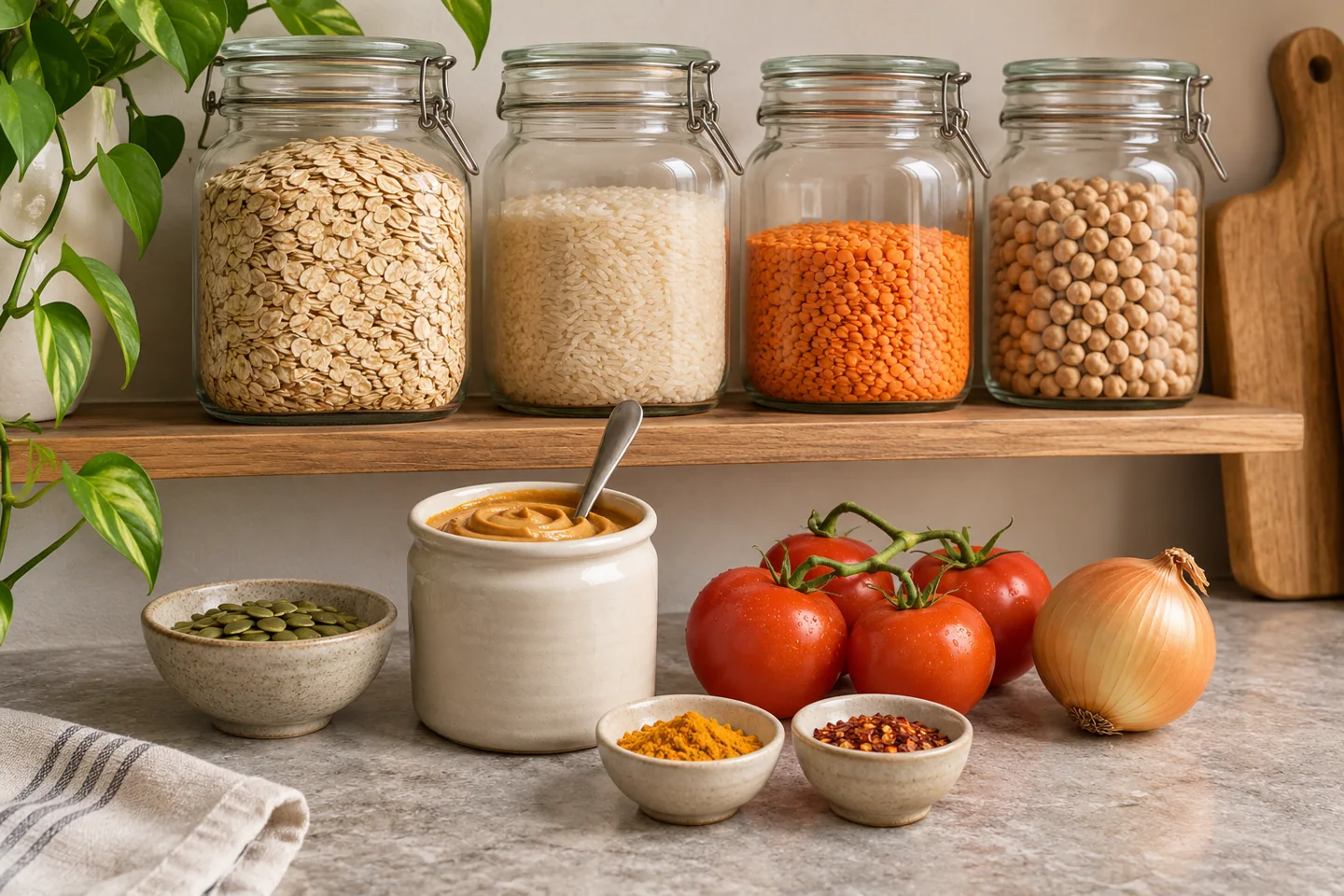
A useful plant-based pantry starts with foods you can turn into meals. Beans or lentils, a grain you enjoy, tinned tomatoes, a few seasonings and some vegetables can offer more flexibility than a cupboard full of unfamiliar specialty products.
The list below is a starting template, not a requirement to buy everything. It draws on the pantry-planning ideas discussed in chapter 15 of Christopher Gardner’s Food Sense, with original shopping and meal-building suggestions from KINSMC.
Choose one or two items from each group
| Group | Examples | Possible uses |
|---|---|---|
| Beans and lentils | Tinned chickpeas, tinned beans, red lentils | Soups, stews, salads and wraps |
| Grains and starches | Oats, rice, wholegrain pasta, couscous | Breakfasts, bowls and meal bases |
| Vegetable foundations | Tinned tomatoes; frozen vegetables stored in the freezer | Sauces, soups and quick pan meals |
| Nuts, seeds or spreads | Peanut butter, tahini, pumpkin seeds | Dressings, toppings and snacks |
| Flavour ingredients | Cumin, paprika, dried herbs, vinegar | Different flavours from the same basic ingredients |
Choose options that fit your allergies and preferences. Store each food as its packaging directs: “pantry planning” includes freezer and fridge decisions, not permission to keep every item at room temperature.
A small starter basket with several uses
For an example shopping list, start with oats, rice, chickpeas, lentils, tinned tomatoes, peanut butter or another suitable spread, frozen vegetables and two seasonings you already like. Add fresh ingredients only when you have a plan for them.
Before shopping, write down three meals that share ingredients. That makes it easier to use an opened tin or a bag of vegetables and to notice what is already in the kitchen. Quantities depend on household size, appetite and how many meals you expect to cook.
Four meal ideas from overlapping ingredients
- Tomato and lentil soup: combine cooked lentils with a tomato-and-vegetable base and season to taste. Prepare dried lentils according to their package.
- Chickpea rice bowl: use cooked rice, chickpeas and vegetables, then add a dressing you enjoy.
- Vegetable pasta: make a tomato sauce with vegetables and add beans for a different texture.
- Oat breakfast: prepare oats as directed, then add fruit and a suitable nut or seed topping.
These are meal concepts, not kitchen-tested recipes with measured yields or nutritional analysis. Use reliable recipes when you need precise cooking instructions, and follow the storage guidance on your ingredients.
Dried or tinned pulses?
Choose according to time, equipment, storage space and local prices. Dried pulses require the preparation stated on their packaging; tinned products can be convenient when time is short. Compare drained quantities where relevant, rather than assuming two equally priced packages contain the same usable amount.
For a simple cost comparison, divide the price by the usable weight. For example, a fictional 400 g usable portion costing 2 currency units costs 0.50 units per 100 g. Keep cooking time and energy costs in mind if comparing dried and ready-to-use options.
Build meals, not just a shopping collection
Put a protein-containing food into your meal plan rather than relying only on vegetables and a starch. Our guide to combining plant proteins explains why variety across the day matters. If you buy plant drinks for breakfast, our soy milk and oat milk comparison shows what to check on the carton.
A cupboard checklist is not a complete nutrition plan. For people eating fully vegan, the NHS vegan diet guidance explains considerations such as fortified foods and sources of vitamin B12.
Sources and editorial note
KINSMC prepared this AI-assisted guide with background from Food Sense: What to Eat and Why, chapter 15, and the NHS resource linked above. Product choices and prices vary by location. No brand testing or price survey is claimed.