 KINSMC
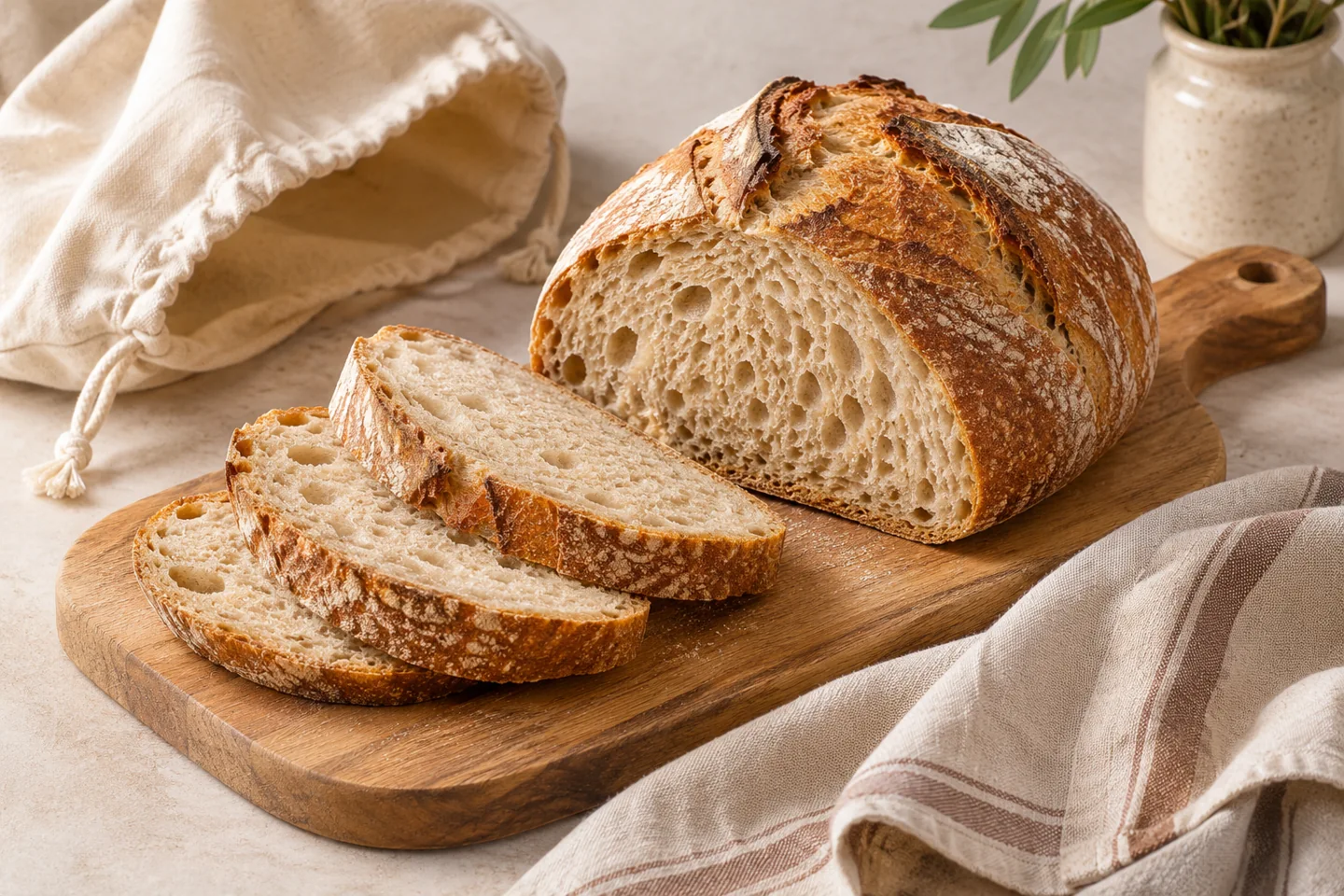
Bread goes stale partly because its starch molecules reorganise after baking, making the crumb firmer. Moisture also moves within the loaf and can escape into the air. That means bread can become firm even inside a sealed bag. Keeping plain bread in the refrigerator often accelerates that firming; freezing is generally a better option when you want to keep it longer.
The right storage choice depends on the loaf and the result you care about. A crackly crust and a soft sandwich crumb respond differently to packaging. A loaf with perishable fillings also has different storage needs from a plain baguette. Start by separating texture changes from food safety, because warming stale bread cannot make mouldy or improperly stored bread safe.
Stale, dry and mouldy describe different problems
| What you notice | Likely issue | Useful response |
|---|---|---|
| Firm crumb without visible spoilage | Staling, often combined with moisture changes | Toast or briefly reheat bread that is otherwise suitable to eat |
| Hard exposed edges | Drying from air exposure | Improve wrapping; use suitable bread for crumbs or croutons |
| Soft, leathery crust | Moisture has moved into the crust | Brief oven heating may restore some crispness |
| Visible mould | Microbial spoilage | Discard the loaf; do not cut away just the visible spot |
What happens to starch after baking?
Flour contains starch granules. During baking, water and heat change those granules and help create the crumb’s structure. As the loaf cools, starch molecules begin arranging themselves again. This reorganisation, commonly called retrogradation, continues during storage and contributes to the familiar change from soft and flexible to firm and crumbly.
Starch contains different kinds of molecules with different roles in this process. Some changes help freshly baked bread set as it cools; others contribute to gradual firming over the following days. For a home cook, the important point is that the process occurs inside the crumb. Blocking evaporation helps with drying but does not stop every mechanism of staling.
This also explains a common puzzle: a packaged loaf can feel stale even when the inside of the bag does not seem dry. The bread has not necessarily lost a large amount of water. Changes in how water and starch interact can alter texture without an obvious change in total moisture.
Why the crust becomes soft while the middle becomes firm
A freshly baked crust is relatively dry. The crumb contains more moisture. Over time, water moves between these regions and toward the surrounding air. When a loaf is enclosed, moisture that would otherwise escape can soften the crust. At the same time, the crumb can become firmer through starch changes.
That combination is why a bagged baguette may have a chewy crust and a disappointing interior the next morning. The bag has helped prevent overall drying, but it has not preserved the original contrast between a crisp shell and soft crumb. There is no ordinary bag that perfectly freezes a loaf’s freshly baked texture at room temperature.
Packaging while bread is still warm can add another problem: trapped steam and condensation. Let a plain loaf cool before wrapping it for storage. Cooling also allows its interior structure to settle, which generally makes slicing less destructive than cutting immediately after it leaves the oven.
Why refrigeration is often disappointing
The temperatures inside an ordinary refrigerator favour the starch changes that make many breads firm. A refrigerator may therefore slow some kinds of spoilage while making the bread feel stale sooner. These are different outcomes, so the statement that refrigeration “keeps bread fresh” needs a definition of fresh.
For plain bread that will be eaten soon, cool room-temperature storage can be more pleasant for texture. For a longer interval, freeze it while it is still good. In a very hot or humid home, spoilage may be the more urgent concern; follow the product label and choose freezing when practical rather than keeping a large loaf on the counter for too long.
Bread containing perishable fillings, toppings or other ingredients requiring refrigeration is a separate case. Follow its label or recipe’s storage instructions. A preference for soft crumb does not override the storage requirements of the filling. The advice for a plain sourdough boule is not automatically suitable for a cream-filled bun.
Choose packaging for the kind of bread
Crusty loaves
A breathable wrapping can help preserve a crisp crust for a short period, but it allows more drying. Airtight wrapping slows moisture loss while softening the crust. If you will finish the loaf quickly, choose according to whether crust or crumb matters more, then refresh individual portions just before eating if needed.
Soft sandwich bread
For a loaf whose appeal is a soft crust and crumb, keeping the original bag well closed usually fits the intended texture. Avoid leaving the cut end exposed. Use clean hands or utensils and keep the storage area clean; crumbs and old packaging can carry contamination to a new loaf.
Part of a loaf you will not finish
Divide it early rather than waiting until it is already hard. Slice bread if you normally eat it as toast or sandwiches. Freeze larger portions if you want to serve them as bread at a meal. The portion size should match how you will use it, because repeatedly thawing a whole loaf is inconvenient and can worsen quality.
How to freeze bread with less waste
- Start with bread in good condition. Freezing preserves its current quality more effectively than it repairs an old loaf.
- Let a freshly baked loaf cool. Wrap portions securely in suitable freezer packaging, limiting exposed surfaces and trapped air.
- Label the portions. Include the type and freezing date so similar-looking bags do not become a guessing game.
- Remove only what you need. Slices are convenient for a toaster; larger pieces need a thawing or warming method suited to their size.
- Follow the bread’s specific instructions. Enriched or filled breads may need different handling from plain loaves.
Freezer burn and absorbed odours are quality problems worth preventing with good wrapping. Thin packaging that tears easily or a bag left open undermines the benefit of freezing. For a household that uses bread slowly, buying or making smaller loaves can be as useful as any storage technique.
Can you make stale bread soft again?
Heating can temporarily reverse part of the starch-related firming and make bread more pleasant. A short oven warming can also drive moisture out of a softened crust. The exact method depends on the bread’s size and condition: a whole loaf, a roll and a thin slice should not receive identical treatment.
Eat refreshed bread soon. It can firm again after cooling, and repeated heating tends to dry it further. Microwaving may soften a portion briefly, but it does not create a crisp crust and the texture can become disappointing as it cools. Toasting is often a more forgiving choice for individual slices.
If otherwise sound bread is too dry to serve plain, use it in a dish where its texture is useful: breadcrumbs, croutons, bread pudding or a bread-based salad. Choose a recipe appropriate to how dry the bread is. A very hard piece may absorb liquid differently from a slightly stale slice, so they are not always equal substitutes.
When to discard bread
Visible mould means the loaf should be discarded. Bread is porous, and contamination can extend beyond the patch you can see. Cutting away a coloured spot or toasting the remainder is not a dependable remedy. The USDA’s food-mould guidance identifies bread and baked goods as foods to discard when mouldy.
Also follow storage and date instructions for packaged products and discard food with other signs of spoilage. A loaf’s appearance cannot prove that every filling or topping has been handled safely. If you cannot establish whether a perishable filled bread was kept appropriately, do not treat reheating as a reset.
Common questions
Does a sealed bag stop staling?
It reduces moisture loss, but starch can still reorganise inside the crumb. Sealing helps with drying; it does not preserve every feature of freshly baked bread.
Should sourdough always stay on the counter?
No single rule fits every loaf and climate. Ingredients, moisture, packaging and room conditions matter. Freeze a portion if you cannot finish it promptly, and follow the maker’s storage advice.
Why does homemade bread seem to change faster?
Recipes and manufacturing methods differ. Fats, sugars and other ingredients can influence texture and keeping quality. Compare similar types of bread rather than assuming every commercial loaf and homemade loaf should age identically.
Sources and further reading
Food-science explanation: Harold McGee, On Food and Cooking, second edition (2004), bread storage and staling sections. Practical references: King Arthur Baking on bread storage and freezing bread. Safety reference: USDA guidance on mouldy food. For meal planning, see our plant-based pantry guide.
Prepared with AI assistance from the cited sources. Featured image: AI-generated illustration.